PhD Preparation Portal
Browse past entrance exam questions by field, submit your essay answers, and vote on the strongest responses from the community.
📂 Browse Categories
📂 All Categories
Select a category to explore its questions.
Only questions the community has already answered — read the essays, vote, and add your review.
📝 My Answers
All the answers you have submitted.
Academic Writing in Examination Contexts
"This book was written with a simple objective: to help students become more effective academic thinkers and writers."
Preface · p. 15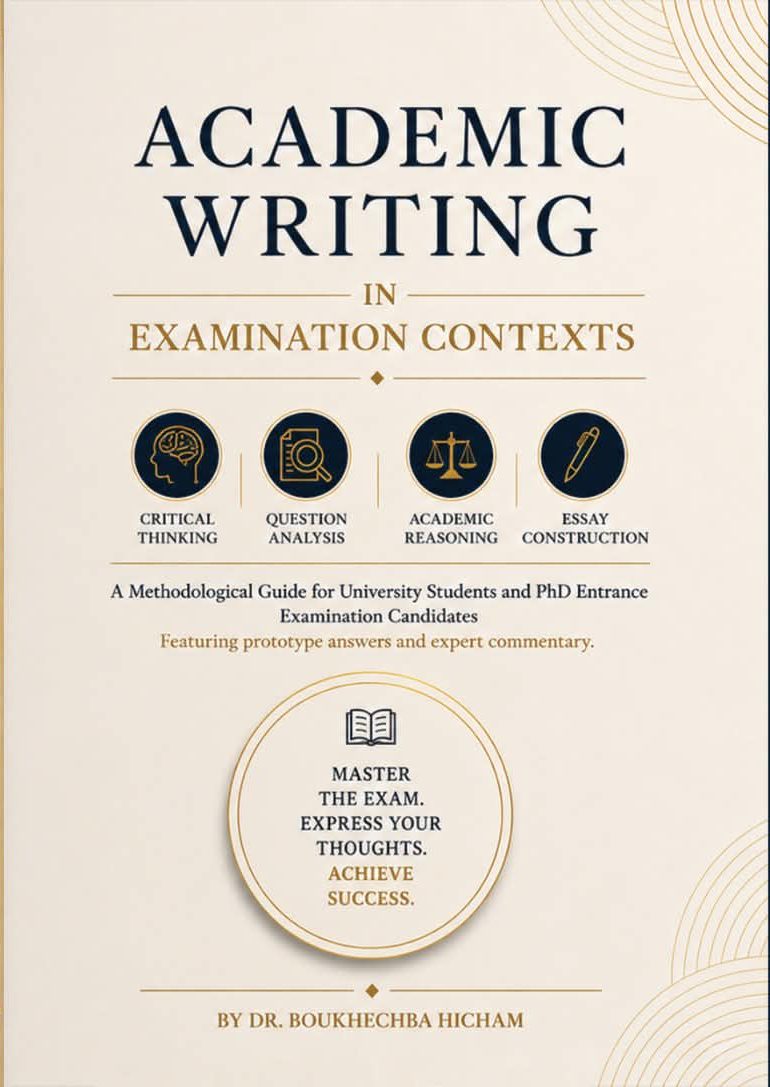
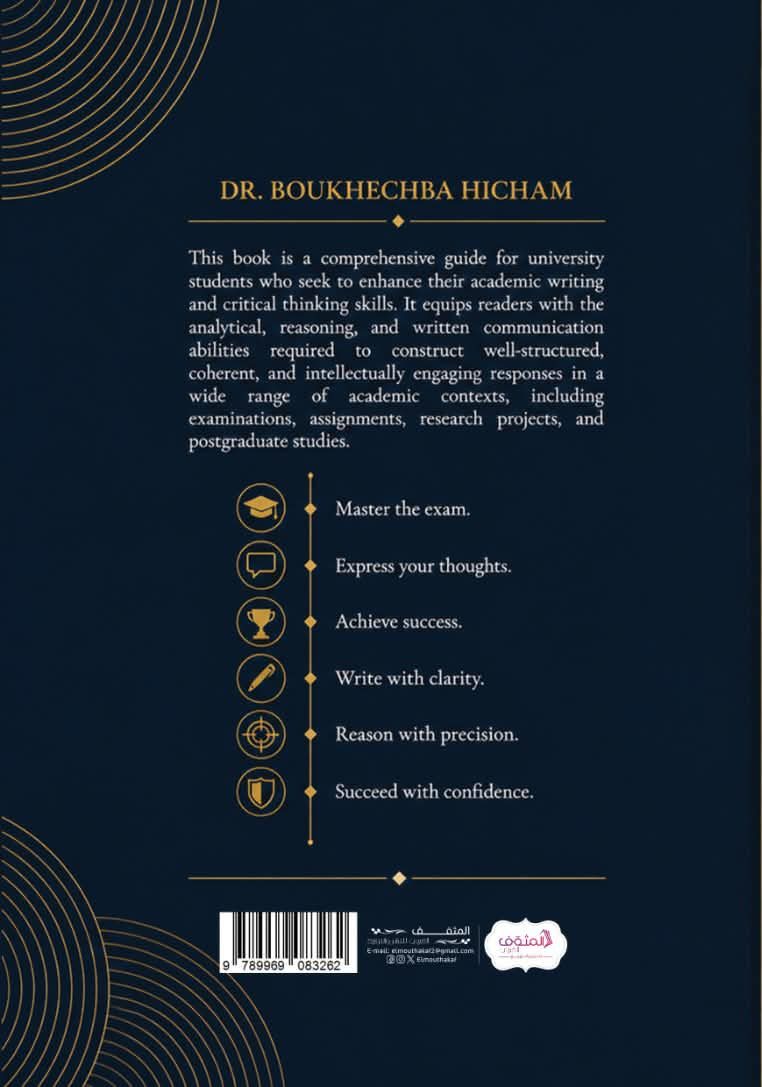
This book is a comprehensive methodological guide for university students who seek to enhance their academic writing and critical thinking skills. It equips readers with the analytical, reasoning, and written communication abilities required to construct well-structured, coherent, and intellectually engaging responses in a wide range of academic contexts — including examinations, assignments, research projects, and postgraduate studies.
Many writing guides focus mainly on grammatical accuracy, paragraph structure, or general essay organisation. Those elements matter, but they are only part of the process. Successful examination writing calls for a deeper set of intellectual skills: critical thinking, question analysis, academic reasoning, synthesis of information, and the ability to turn disciplinary knowledge into well-structured arguments. This book therefore treats writing as a process of thinking, reasoning, and problem-solving.
It also takes examination contexts seriously. Academic writing is often taught as a generic skill, detached from the realities of formal assessment. In contrast, this work recognises that examinations impose their own constraints — limited time, specific prompts, and clearly defined expectations — and provides strategies built for those conditions: identifying directive words, uncovering the implicit meanings inside questions, developing coherent thesis statements, and constructing responses that address what examiners are actually looking for.
It was not written in a closed office. It grew out of years of teaching and supervision, and out of a private PhD preparation course.
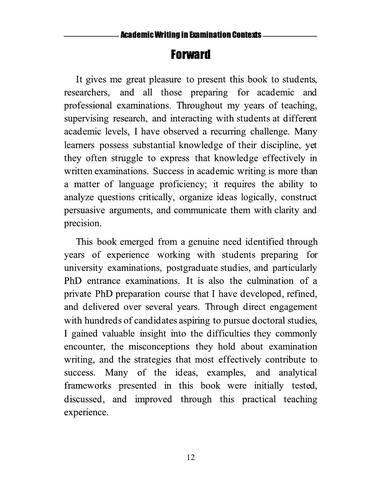
Across years of teaching and supervising research, the author kept meeting the same problem: students who genuinely know their discipline, yet hand in a script that shows almost none of it.
"Many learners possess substantial knowledge of their discipline, yet they often struggle to express that knowledge effectively in written examinations."
Forward · p. 12The book is also the culmination of a private PhD preparation course the author developed, refined and taught over several years. Working directly with hundreds of candidates, he came to know the recurring difficulties, the common misconceptions about examination writing, and the strategies that actually make a difference.
Most of the examples and analytical frameworks in the book were tested with real students first — discussed and improved in the classroom before they reached the page.
Six reasons, each drawn from the book itself — not from marketing promises.
Because the gap is not in knowledge, it is in performance
You know the material, and the mark still lands below it. The book works on exactly that distance: how knowledge becomes a readable, convincing answer on the page — not how facts are collected.
Forward · p. 13Because the exam has rules of its own
Academic writing is usually taught as a generic skill, detached from real assessment. But an exam imposes its own constraints: limited time, a specific prompt, clearly defined expectations. The book builds strategies for that setting in particular.
Significance of the Book · p. 7Because the question says more than it shows
"Discuss" is not "analyse", and "compare" is not "explain". A whole chapter is given to directive words: their roles, their overlaps, and the mental operations they demand without ever stating them.
Chapter 4.3–4.4 · pp. 102–113Because it shows the thinking, not just the result
Five complete model essays with expert commentary: why the paragraph opens this way, why that piece of evidence sits there. The model is not a text to copy but reasoning made visible — and reusable.
Chapter 6.7–6.11 · pp. 157–208Because entrance questions have a hidden logic
Thirty-six pages analysing past PhD entrance questions, closing with two sections on what those questions reveal and on the "hidden architecture" that recurs behind them. The aim is not memorisation but understanding how a question is built and judged.
Chapter 7 · pp. 218–253Because what you learn outlives the exam
Question analysis, critical thinking, reasoning, essay construction — skills that travel with you into research, the dissertation and professional communication. The exam is the occasion for learning them, not the end of it.
Significance of the Book · p. 8Four methodological choices that separate it from the conventional writing manual.
Writing as thinking, not as grammar
Most guides stop at linguistic accuracy and paragraph organisation. This book treats writing as a process of thinking, reasoning and problem solving.
Built for examination conditions
Limited time, a specific prompt, stated and unstated expectations — the strategies here are cut for that context.
From theory into practice
No principles suspended in the abstract: detailed analyses of real questions, prototype answers and expert commentary walking through each one.
The reasoning made visible
Once the reasoning process is visible, students see how a successful response is constructed, from first interpretation to final conclusion.
Written first for exam conditions, but its scope reaches further.
The skills discussed in these pages serve coursework, research projects, dissertations, scholarly and professional communication too. The book does not claim to offer definitive or universally applicable answers: academic writing remains a dynamic activity shaped by disciplinary conventions, and what it proposes are methodological tools to adapt to your own context and objectives.
Taken from the opening pages — before the real work even begins.
"Such an approach transforms writing from a mysterious talent into a skill that can be consciously learned, practiced, and refined."
📍 Significance of the Book · p. 8"The primary objective of this book is to bridge the gap between knowledge and performance."
📍 Forward · p. 13"Students are frequently expected to produce sophisticated academic responses under significant time constraints, often without receiving explicit guidance on how to approach questions strategically."
📍 Forward · p. 13"These questions represent more than isolated assessment items; they reveal recurring themes, intellectual expectations, and disciplinary priorities."
📍 Forward · p. 14"...transforming academic writing from a source of anxiety into a tool for intellectual growth and scholarly achievement."
📍 Significance of the Book · p. 8"Readers are guided from question analysis and critical interpretation to argument development, academic reasoning, essay construction, and response evaluation."
📍 Preface · p. 15Tap any page to enlarge and read it.
These are the front pages only. The seven chapters begin on page 21.
978-9969-08-326-2
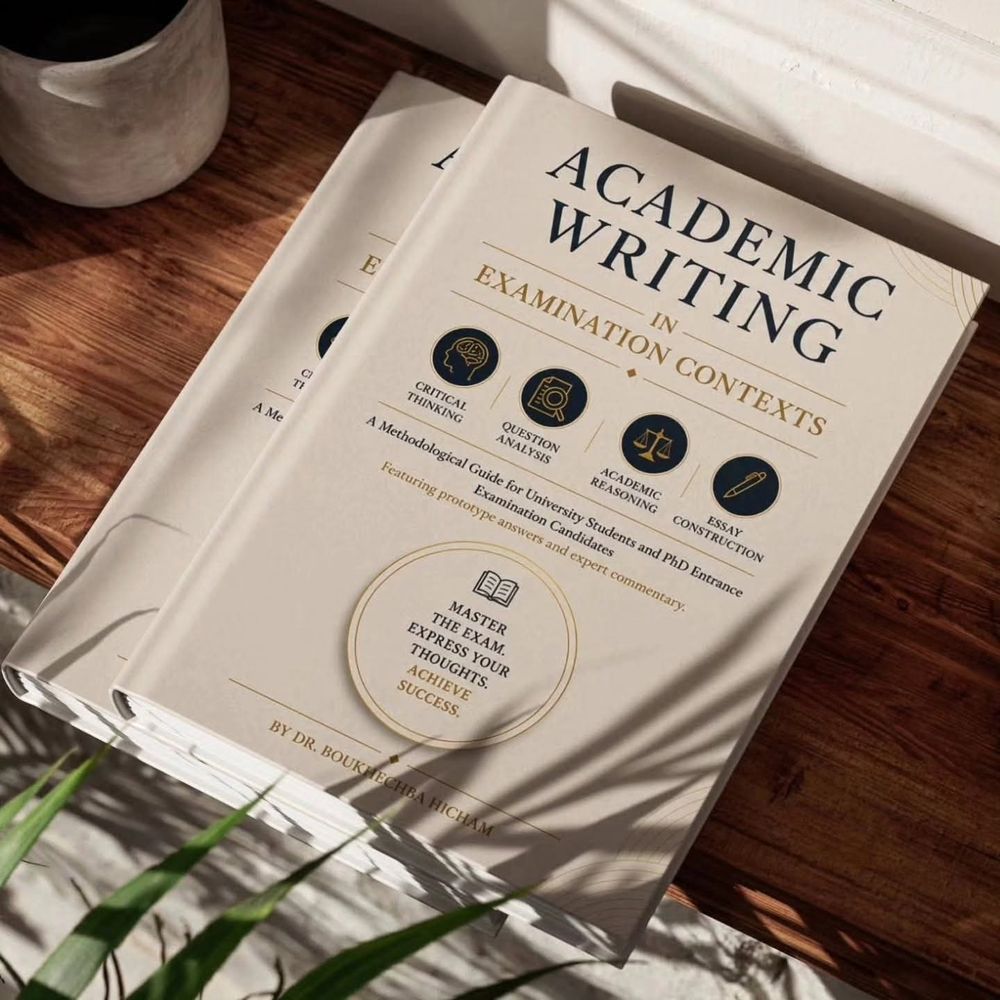
The book exists. The rest is on you.
The form takes under a minute, and you pay nothing until the book reaches your door.
This book is protected by intellectual property rights. Any reproduction constitutes an infringement.
⚙️ Admin Dashboard
Create, edit and delete categories and questions.
📦 Book orders have their own page
The order desk moved to orders.html so it loads on its own, works on a phone, and can stay open on a second screen while you pack. It reads the same orders from order-api.php — nothing was migrated and nothing was lost.
It asks for the same key: the value of ADMIN_KEY near the top of order-api.php.
🌐 Publish your changes
Downloads a complete copy of this site with your current categories and questions built in. Replace the file on your web host to make the changes public.
💾 Backup & restore
Export your content as a JSON file, or import a previously exported file. Importing replaces all current categories and questions.
🔑 Administrator password
Change the password for the account admin. Use at least 6 characters.
♻️ Reset content
Discards every edit made in this browser and restores the categories and questions the site was originally published with. Answers and user accounts are not affected.